
In a press statement released by the Recording Industry of America Association on July 10, 2026, two new advisory labels were unveiled, solely designated for the purpose of giving consumers the ability to identify AI-generated and AI-assisted musical content. In a statement jointly released in the press statement International Federation of the Phonographic Industry CEO Vikki Oakley and RIAA CEO Mitch Glazier were quoted as saying, “Fans want to know whether and how generative AI has been used in the music to which they listen. Given how important human artistry and authenticity is to music lovers all over the world, these labels will provide an immediately understandable and easily scalable approach to transparency.”
This sentiment is shared across the local Lexington music scene with Bluegrass Community and Technical College student and WRFL DJ Payton Chenault explaining “As someone who lives and breathes music, the rise of use and reliance on AI in the music industry is incredibly disappointing and is the exact opposite of what music should be. I feel that music, no matter the genre, is one of the most important and fundamental forms of art and expression that has not only stood the test of time but has evolved into a beautiful vast mix of sounds, beliefs and messages all created by individual human performers.” Chenault would go on to further state “This is why I believe the introduction of the labels for music that’s been created using AI or any assistance by AI is not only smart but becoming necessary.”
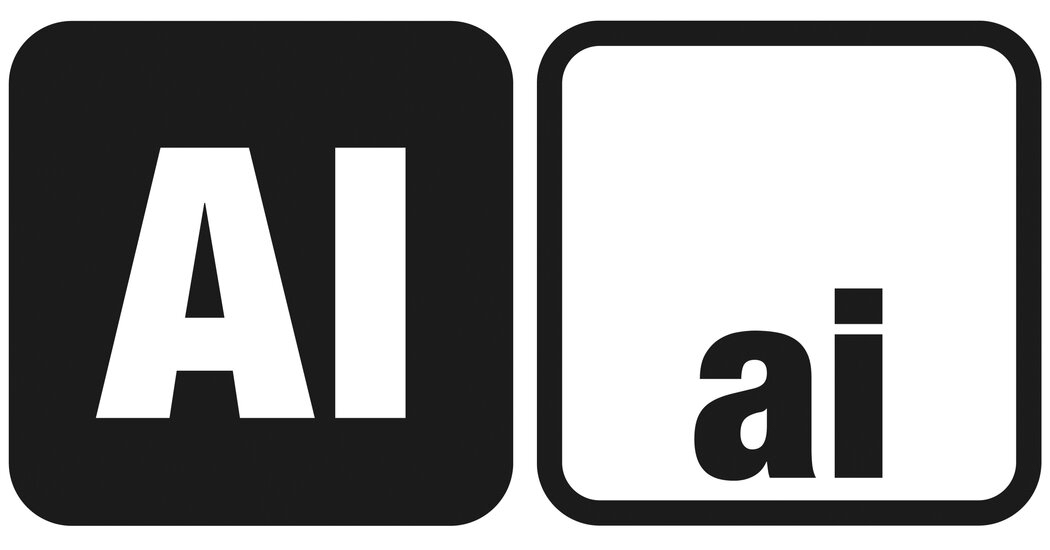
These advisory labels consist of simple black and white designs, similar to the parental advisory label popularized in the late 1980s, with the simple icons being voluntary labels used to differentiate tracks that are either “AI-Generated” or “AI-Assisted.”
The label consisting of a solid black background with a large white capitalized “AI” symbolizes music where AI generation was used for either the “entirety or primary” of the recording process. Whereas the second label featuring a white background and lowercase “ai” represents occurrences in which the music “was created substantially by humans and expresses human creativity.” The RIAA, as per this press release, defines “substantial creation” as humans performing “the lead vocal and primary instruments.”
As of now, these small black and white icons don’t cover the usage of generative AI in regards to cover art, lyrics or even music videos uploaded to streaming platforms. The lack of labeling for these inherently artistic processes in the music industry has drawn backlash. The University of Kentucky student Alex Gilliam (member of local bands Foolsmate and Tiramisu) was quoted as saying “No matter your “talents,” anything made by a human with artistic intent is art, art that is interesting and worth being created. There is inherently more value and artistic nuance to someone’s very first sounds on an instrument they’ve never played than anything AI could ever produce.”
Although the labels are currently voluntary and don’t fully represent all usage of AI, both the introduction and usage of them are being backed by organizations across the board such as the Recording Industry of America Association, IFPI, American Association of Independent Music, Worldwide Independent Network, Independent Music Companies Association, The Grammys, the Screen Actors Guild and Human Artistry Campaign. As Harvey Mason Jr., CEO of The Grammys, stated within the press release, “As AI continues to be integrated into the creative process, artists and fans alike deserve a clear way to communicate how and when it’s being used.”
The advisory labels aim to bring a sense of transparency into the music industry as AI-generated music has begun to redundantly flood streaming services. The coalition of music industry and artists revealed that in April the streaming platform Deezer reported 44% of all new music they received consisted of AI generated tracks, along with Apple Music stating one-third of the tracks uploaded to its platform are “100% AI.”
As of late, the demand for a more unified structure for handling AI-generated music continues to rise from listeners, although it unfortunately remains unclear when and if we will see these AI advisory labels being implemented across all streaming platforms under a united rulebook.